
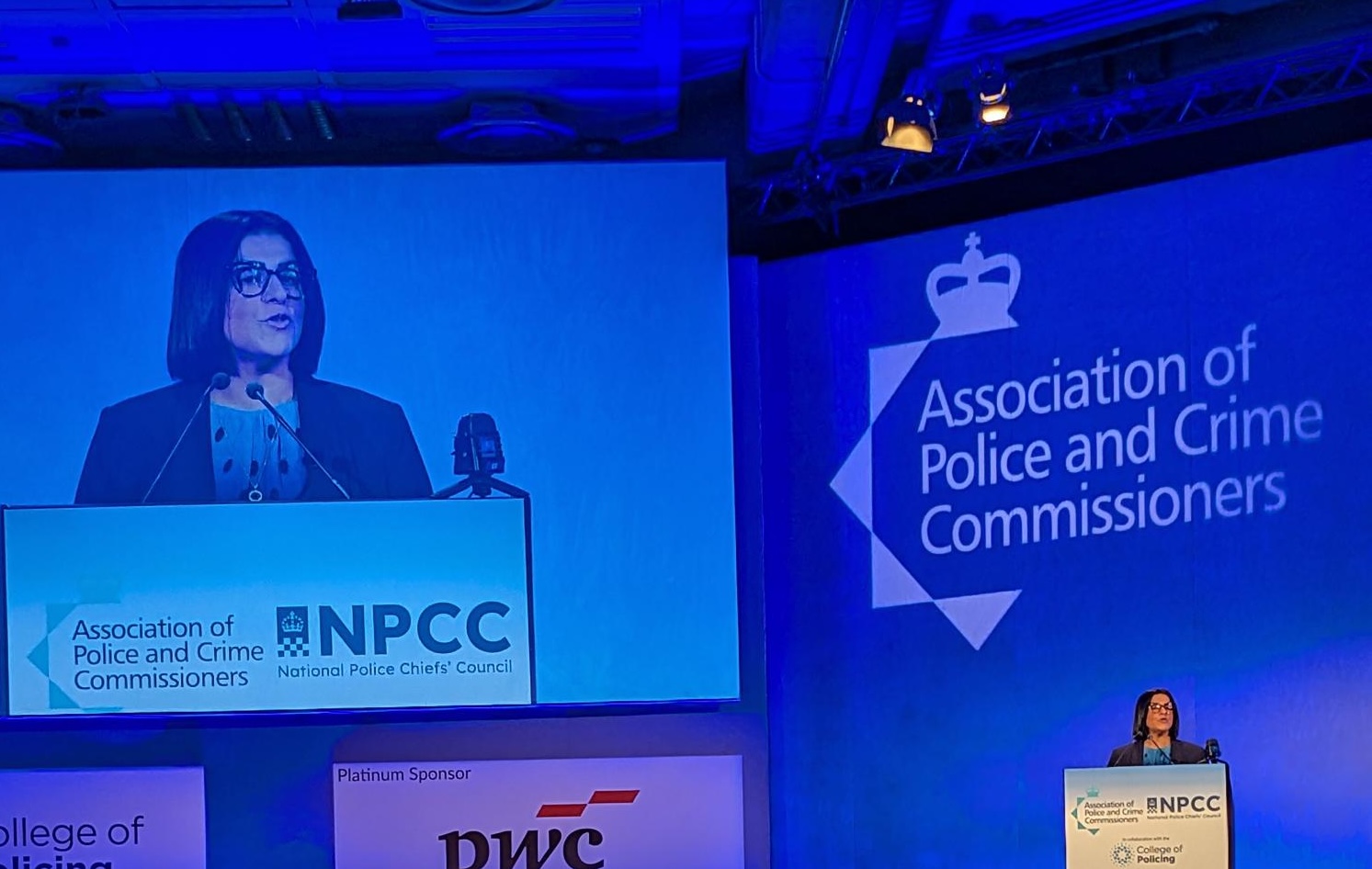
This week, Leapwise attended the APCC-NPCC Partnership Summit, meeting with chief constables, PCCs, and other key stakeholders to discuss the state of policing and the agenda for change across the sector.
It was, unsurprisingly, a tense affair. Last week, the Home Secretary announced that PCCs are being abolished and their role taken on by deputy mayors in new mayoral areas and ‘boards’ (to be determined) where there are no mayors. The Summit remains an important moment in the police calendar – as much as for the conversations happening in the margins as for those on the main stage.
4 key insights from this year’s APCC-NPCC Summit
1. We’re going to have to wait for the big news!
The key headline from the Home Secretary’s speech on 19 November was that the Police Reform White Paper will be out before Christmas. This should clarify the Government’s agenda for the rest of the parliament. The National Centre of Policing is still in the plans, there is still a push on standards and performance, and there will be an ongoing focus on ‘efficiency’. But we’ll have to wait until our early Christmas present arrives to know more.
We did observe some shifts in language from the Home Secretary that might signal what we should expect from the White Paper. A key line that stood out for us was:
“I was a reformer at the MoJ, and I will be a reformer at the Home Office too… and I will be driven above all by performance.”
Then, there was a reference to a “postcode lottery”, reinforcing the sense that consistency and control at the centre would be a key theme. Finally, there was a critique of bureaucracy and praise for technology-based innovation – shout-outs to Avon and Somerset Police and Lancashire included.
2. Policing needs to move faster to keep up with rapidly evolving demand
The discussions during these two days highlighted that policing is not adapting quickly enough to accelerating societal and technological change.
For example, Essex PFCC Roger Hirst referenced the Emergency Services Network programme, adding that by the time it delivers (at very considerable cost), it will be providing policing with technology that will already have been superseded. That focus on productivity was central. CC Sir Andy Marsh, Chief Executive Officer, College of Policing) provided a helpful definition of it delivering the outcomes expected by the public in the quickest and most cost-efficient way.
There was much support for the messages we recently shared in our submission to the Public Accounts Committee Inquiry on police productivity. We argued that traditional bureaucracy, hierarchical structures, and legacy approaches to managing crime present significant obstacles to modernising police practices.
The predominance of a people-intensive operational model (where 77% of police funding goes to workforce pay) restricts opportunities to innovate and invest in modern technologies and service models. And while skilled staff and excellent face-to-face service remain vital to effective policing, this heavy reliance on labour has become unsustainable and inflexible, largely due to historic under-investment in both physical and digital infrastructure.
There are multiple strategies to enable police to ‘speed up’ and become more responsive to the needs of the population. But delivering on them will require the Home Office and police forces to re-evaluate their operating models, review finance strategies, revise decision-making frameworks, and establish infrastructures that promote rapid adaptation to emerging risks and threats.
3. Policing isn’t an island
Many speakers referred to the need for cross-government and cross-sector action to deliver on the government’s big missions.
Notably, Deputy Assistant Commissioner Helen Millichap KPM, Director of the National Centre for Violence Against Women and Girls and Public Protection, highlighted the societal nature of VAWG. David Gauke and Sir Brian Leveson spoke eloquently on the need for a joined-up approach to criminal justice. And the online safety panel highlighted the role of social media platforms in shaping and preventing online harms and radicalisation.
While work is clearly being done to join up approaches across sectors, the picture was actually somewhat disheartening. Labour’s promise of mission-driven government has not yet translated into effective ways of aligning cross-departmental working to support these lofty ambitions. And policing and government as a whole are still on the back foot when it comes to influencing global industries.
4. Policing’s most significant problems can’t be tackled without a clear plan for police leadership and culture
While police officers and leaders across the country have been working hard within constrained circumstances, it was clear that the current operating model is straining the workforce.
High demand and constant change are stretching officers, undermining both workforce wellbeing and public service, which demands even more effort to strengthen leadership and mission focus at all levels. There was recognition that leadership is not purely about rank, but about behaviours: creating an environment where people feel able to raise concerns, share ideas, and innovate is critical – not just for morale, but for operational effectiveness. Given that 58% of officers often feel burnt out due to work, there was an acknowledgement that people must be front and centre for policing to function effectively. Building resilience must be a key organisational priority, not just an individual responsibility.
At the same time, there was a focus on the need for policing to continue working with communities to strengthen internal and public confidence. There was discussion of local and national efforts on multiple fronts. The Home Secretary, Shabana Mahmood, highlighted the opportunity to build visibility and trust with communities through the Neighbourhood Guarantee and to continue work on raising police standards. Discussions over the two days reflected on ways to ensure victims are at the heart of policing, for instance and ways in which to frame this.
For example, in the context of VAWG, Deputy Assistant Commissioner Helen Millichap highlighted the need for national standards and streamlined training to equip officers with the skills – curiosity, listening, and empathy – needed to support victims effectively and consistently across forces.
What’s Next
It was hard not to feel, after two days, that policing has some serious work on its hands! In many areas, more radical thinking and action is required. Still, it was also clear in side conversations that the sector can draw on brilliant ideas, skills, and new technologies to begin meeting the challenge.
Speaking with our friends and partners across policing, we think now is the time to start shaping the future of policing. Please connect with us to hear about solutions we are developing nationally and locally.